



09 Nov Lovelock Cave
Lovelock Cave was intermittently occupied by Native Americans from approximately 3,500 years ago until the middle of the 19th century. It is considered by archaeologists to be one of the most important sites in the history of North American archaeology. Unfortunately, in the first decades of the 20th century guano miners removed some 250 tons of material, shipped to a fertilizer company with little regard for the reported “several thousand specimens” of human skeletal remains and cultural artifacts it contained. In later scientific investigations one of the most important discoveries was a cache of canvasback duck decoys, made of marsh grass called tule. Most specimens even had feathers attached. The virtual-reality tule decoy featured here (click on its hotspot) was created from a modern reproduction.
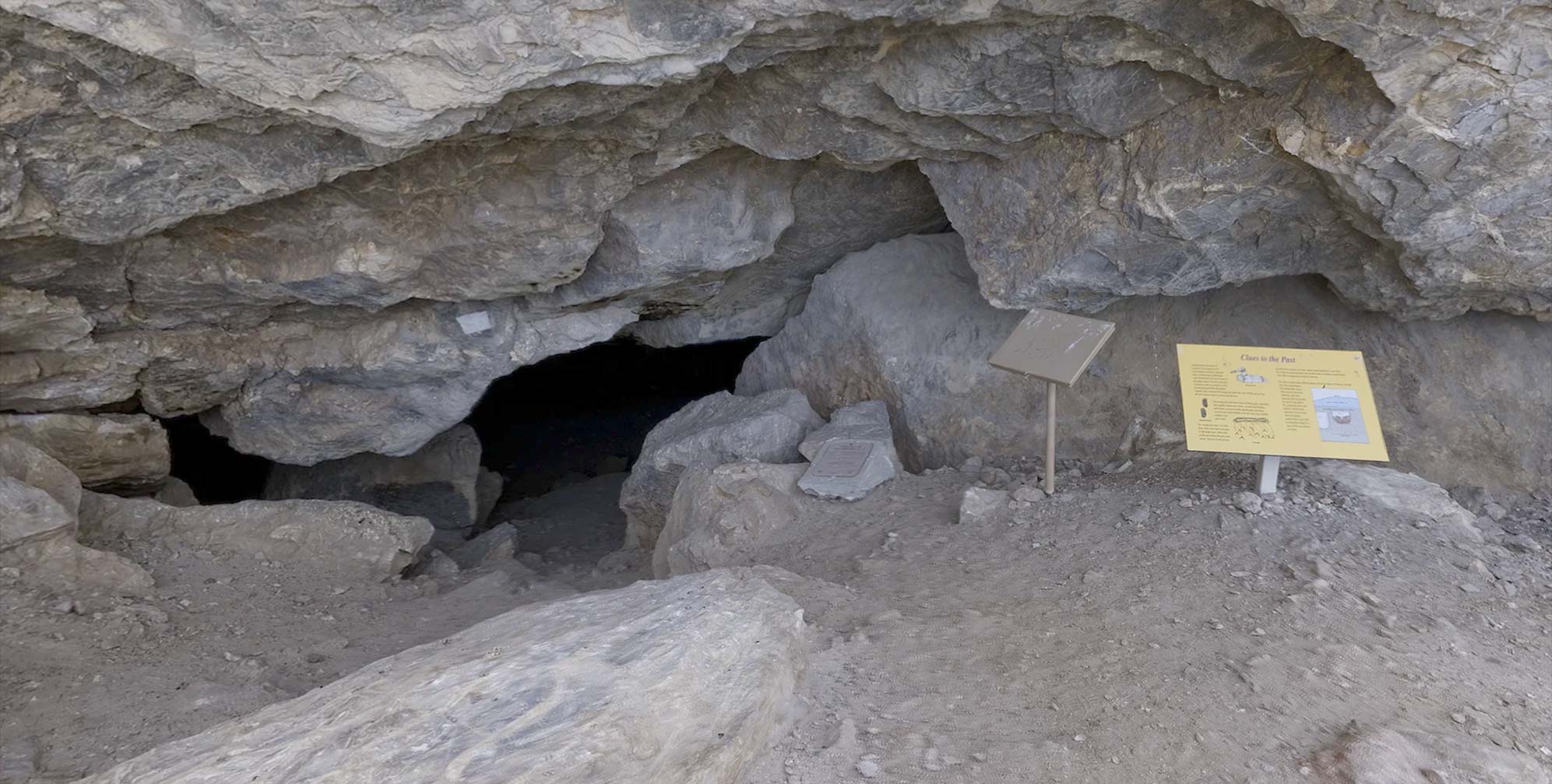
Many archaeologists believe that the Lovelock Culture was replaced by Northern Paiutes a thousand years ago. The Paiutes have an oral tradition describing the defeat of foes, the Saiduka, who lived within their territory, near lakes and marshes. They speak of a great battle leading to the extermination of the Saiduka which occurred at Lovelock Cave.
During the era of western immigration the area below the cave, which was then a vast wetland known as Big Meadows, would be filled with oxen fattening up before their trek through the Forty Mile Desert.
Click here to see the location in Google Maps.
Tule decoy reproduction created by Mike Williams, used courtesy Scott Klette. Click here to see the virtual-reality duck decoy in full resolution.


Simon Martinez
Posted at 08:12h, 11 AprilMy DNA shows connections to this site
Individual Genomes
Location
Lovelock Cave, Nevada, US
Country
USA
Date
8-132 calCE (1836±28 BP, AAR-24200
D.R. Pedraza
Posted at 05:20h, 25 JanuaryI am a 97% DNA match to one of the four. Amazing information!
Native American Nevada 150 AD
Lovelock4
mtDNA: D1Y-DNA: Q1b1b (BZ577)
Shared DNA: (Sample Quality: 36)
7 SNP chains (min. 60 SNPs) / 29.09 cM
Largest chain: 211 SNPs / 7.88 cM
Heather Benedict
Posted at 04:14h, 10 JanuaryThe black residue outside of the cave was most likely due to how the native Americans explained that they would smoke out the Giants in the caves back in the day by setting fires of the cave entrance.
Arnold Warrd
Posted at 02:42h, 20 MarchI wonder if they were doing some kind of metal smelting there, with all the accumulation of black carbon.
David Shelp
Posted at 12:17h, 09 NovemberBlack reside due on a cave celling is created in cave/cave like structures because when first visited the victors used torches to light the way. Smoke contain high concentrations of carbon. It’s logical not mythical. Hold a candle under almost anything and the smoke discolors it.
eileen martinez carey
Posted at 16:18h, 14 AugustA few years ago my Paiute SisStars (Jesse & Diane) asked me if my Family was from Nevada..i said not that i know of although my Grandfather was Kiowa …others in my Family may be mixed as well..so i asked “why”? And they told me because i have red Hair..they said they wondered because they said “our Ancient Ancestors had Red Hair and for a while they were nice then they started eating us, so we buried them in a cave” …i told them as a Child i remember going to some “Cowboy” Town outside of Reno and they had a old “saloon” in the basement there was a “Museum” and in there i remember seeing a “Mummy” inside a glass case dressed in Leather Leggings & NJN Bead-work with a Headband with fancy Bead Work…the Leggings were fancy too…like he was a great Warrior…i remember thinking wow he had Red Hair..when i shared this story from my Childhood ..the SisStars said “YES that is one of our Ancestors they used to be nice then bad Spirit took them” ..anyhow it is an interesting Story for sure….especially that they said they were Ancestors…..
Sydney
Posted at 16:45h, 19 MarchHi There!
Not sure if I can help clear up any confusion on the smoke smell…After meeting with several BLM representatives, Lovelock Cave as well as Hidden Cave near Grimes both have smoke residue because that’s how they combated the remaining guano deposits on the ceiling. They ignited fires in these caves in order to burn away any unsafe deposits of guano, in order to allow people to actively visit these historic sites.
It’s possible these prehistoric peoples used the caves to cook, but with locations especially like Hidden Cave [that are completely dark with no oxygen flow] it doesn’t make sense why someone would be building a fire in there for any reason…there would be no way to breathe in there. These caves were used as a ‘prehistoric storage unit’ of sorts, visiting only to collect and store their most prized possessions. I believe their day-to-day living took place along the marshes, like Stillwater and Humboldt. They would only retreat to these caves to access their most valued items.
Maybe this helps? 🙂
Dave
Posted at 13:55h, 01 JulyHello Susan,
It is pretty evident the amount of creosote on the roof of the cave could only be produced by burning several tons of wood over an extended period of time. If you have been there you must have noticed the entire ceiling is coated. In regards to “cave art” there has never been any mention of it existing in the Lovelock cave. It would be pointless to draw pictures on the wall of a cave you use for cooking your food in.
Valerie Summers
Posted at 20:29h, 04 SeptemberI’ve noticed a few other cave sites near Fallon that have change drastically over the last 4 years. The cave art is barely visible now due to people touching the cave walls and burning modern day fires. The disrespect for our local history is saddening.
Dave
Posted at 22:29h, 11 JuneFinaly had a chance to check out the cave a few days ago. Definately worth the trip. I could still smell the smoke from the ancient fires that had been burned in the cave which is amazing as it has not been used for a thousand years.
The entire ceiling of the cave is coated with the residue of smoke, exactly as a person finds in an old brick chimney. I would like to see the results of an analysis of the soot, if one has been done, to determine the type of wood burned in the cave. That would help determine the time frame of its use.
Susan LaBuda
Posted at 17:34h, 22 JuneThe smoke smell when I visited,in 1993,had no ancient date because the bag of charcoal briquets and aluminum grill were still in evidence.
Sad, some people would view a priceless treasure like Lovelock Cave as just one more place to trash.
At Grimes Point, out of Fallon, the most wonderful cave now lies behind a heavy steel door, open once a month, only, if you tour under the auspices and with the Museum staff. I think that’s a perfect idea for LC also.